Cluster Management
This guide explains how to register and manage target clusters for deploying applications. AMDP supports multiple Kubernetes cluster environments. It allows users to register and manage information for accessing each cluster resource.
Cluster management is only accessible to users with ADMINISTRATOR rights in AMDP.
Cluster List
Selecting Cluster Management from the menu displays the cluster list.
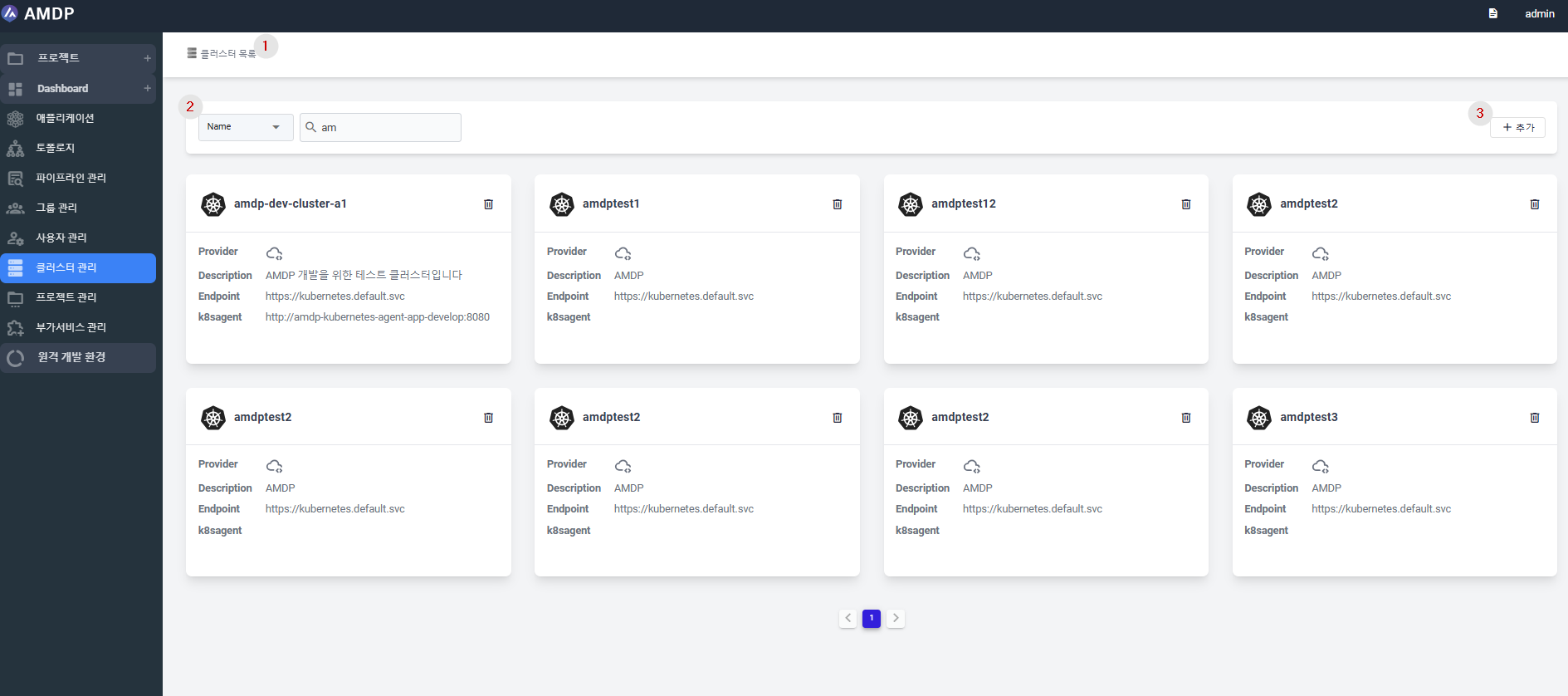
① List of registered clusters.
- Name: The name of the cluster.
- Provider: The infrastructure provider where the cluster runs.
- Description: Short summary or purpose of the cluster.
- Endpoint: Kubernetes API server URL information of the registered cluster.
- k8sagent: Connection information for the Kubernetes-agent service installed in the cluster.
② Search bar to find clusters by name, endpoint and k8sagent
③ The ADD button takes you to a screen for adding new clusters.
New Cluster Registration
AMDP supports multi-cluster environments. You must register a cluster after the initial installation.
The first registered cluster should be named defaultcluster.
After registration, the Name and AMDP's Kubernetes Agent URI information cannot be modified.
Details for registering a new cluster is explained as following:
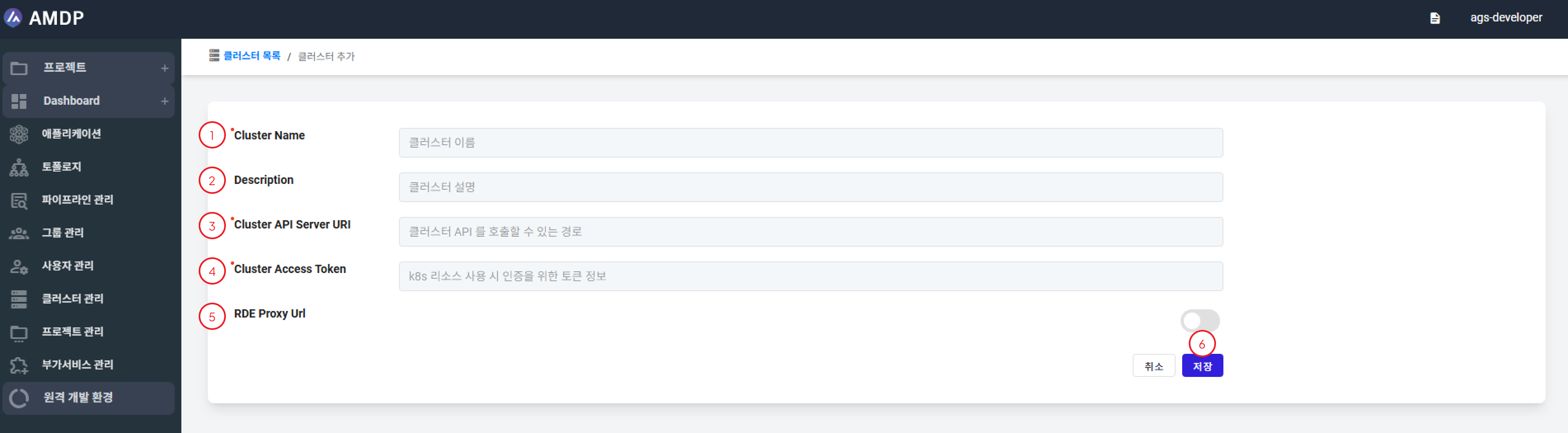
① Cluster Name: Enter the cluster name. For the first registration, it is recommended to use defaultcluster .
② Description: Short description about cluster.
③ Cluster API Server URL: Enter the API server address of Kubernetes.
④ Cluster Access Token: Access token to authenticate when calling the Kubernetes API.
⑤ RDE Proxy URL: Proxy URL information for calling the RDE API when using the RDE feature.
The auto-generated Secret resource is named amdp-platform-kubernetes-saadmin-token-xxxxx .
⑥ Save button: Create the cluster with the entered information.
Cluster Modification
You can modify the following items for the primary cluster.
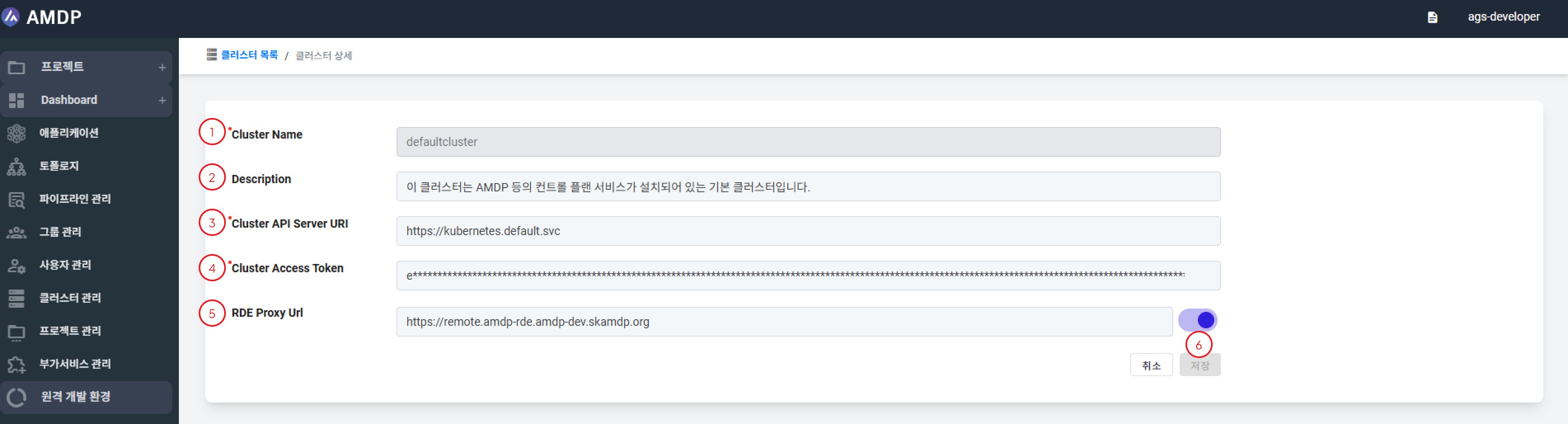
① Cluster Name: The registered cluster name cannot be modified.
② Description: Short description about cluster.
③ Cluster API Server URL: The API server connection URL of the cluster.
④ Cluster Access Token: Access token to authenticate when calling the Kubernetes API.
⑤ RDE Proxy URL: Proxy URL information for calling the RDE API when using the RDE feature.
⑥ Save button: Save change information.
Cluster Deletion
Delete a cluster by clicking the delete button in the cluster list.
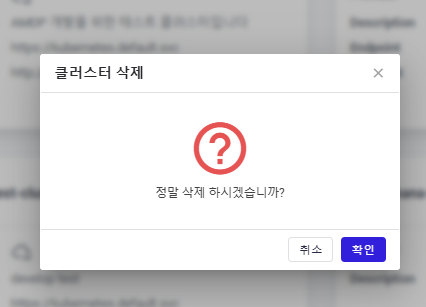
When a confirmation popup appears, proceed the deletion by clicking the confirmation button.